For his Cruise 2026 collection, Nicolas Ghesquière took Louis Vuitton to Avignon, France, transforming the Palais des Papes—a former papal residence and 14th-century stronghold—into a dramatic runway stage.

What unfolded wasn’t merely a fashion show, but a strikingly cinematic performance, where the echoes of medieval pageantry and theatrical flair met futuristic silhouettes and fearless style experimentation.
Unlike designers who draw from a single theme or time period, Ghesquière thrives in complexity. His vision for Louis Vuitton doesn’t aim for costume or historical reenactment; instead, he threads ideas across centuries, genres, and sensibilities. The result for Cruise 2026 was a collection that felt both grounded in history and delightfully unbound by it—a wardrobe for a time-traveling heroine, as comfortable in a Renaissance court as in a Blade Runner sequel.

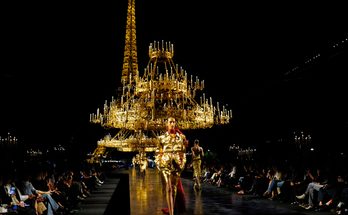
The setting played no small role in this fashion opera. The Palais des Papes is no stranger to drama: it housed six conclaves between 1334 and 1394 and now serves as a key venue for Avignon’s famed theater festival. The fashion show embraced this dual legacy. The courtyard was arranged like a stage—rows of altar-like wooden chairs with red velvet, flanked by empty theater seats, all under moody lighting and an otherworldly soundtrack that blended choral music with galloping hooves and birdsong.
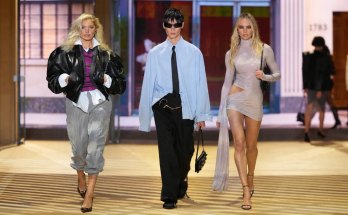
Ghesquière used this rich backdrop to explore fashion’s “performative aspects,” as noted in the show’s concept. The collection unfolded like a medieval fantasy, rewritten for our current age. Chiffon dresses with ruffles whispered of romance, while structured leather pieces and sharply geometric embroidery added a warrior’s edge. These were not passive princesses—they were punks in metallic minis, futuristic Joan of Arcs in space-age boots, and rogue rebels in gleaming armor-like fabrics.
Signature Ghesquière flourishes abounded. There was a Victorian-style shirt made entirely of swinging chains, Renaissance jacquards trimmed with shearling, and a spectacular fuchsia mini skirt sculpted in pleated leather, flaring like a frozen bloom. A standout look featured a white cargo jacket paired with a silver snakeskin mini skirt, finished with cutout boots—modern, daring, and completely in character for the show’s enigmatic heroines.

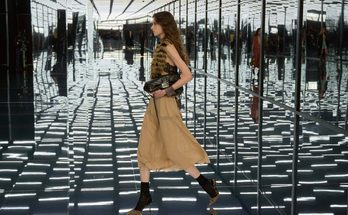
Each look told a story. Some referenced the ceremonial majesty of religious garb—ornate, powerful, symbolic. Others embraced play and provocation, with broken mirror embellishments and futuristic tailoring. And yet, despite the grandeur and drama, there was intimacy in the details: thoughtful layering, refined craftsmanship, and an interplay of textures that invited a second, closer look.
In the show’s final act, the models took their seats in the red theater stands, gazing at the audience as applause rang out—a reversal of roles that subtly reminded us that fashion is as much about performance as it is about presentation. Ghesquière walked the runway not as a curtain call, but as a closing gesture in a play without a script—just vision, mood, and meticulous construction.

In this era of digital fatigue and fast content, Ghesquière’s Cruise 2026 show offered something rare: a reminder that fashion can be spiritual, theatrical, and transformative. Without clinging to a single theme or trend, the designer invited viewers into a multi-sensory experience—where fashion wasn’t just seen, but felt.
In the sacred halls of the Palais des Papes, Louis Vuitton didn’t just show a collection. It held court.