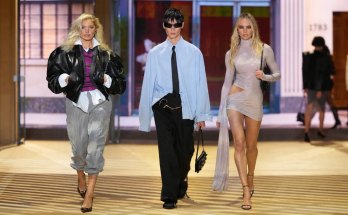
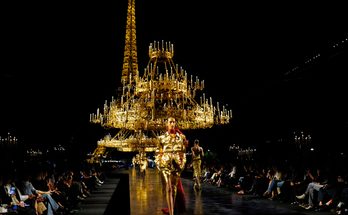
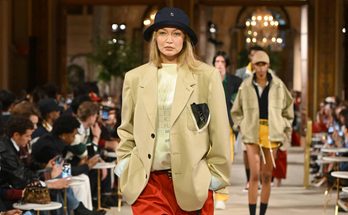
Maria Grazia Chiuri has long used fashion as a way to explore femininity, identity and the relationship between clothing and the body. From her years at Dior to her new position as chief creative officer of Fendi, the Italian designer has consistently blended feminist ideas with romance, history and cultural references. For Fendi’s Spring/Summer 2027 collection, Chiuri turned her attention to the body itself—and to one of Italy’s most recognizable performers.
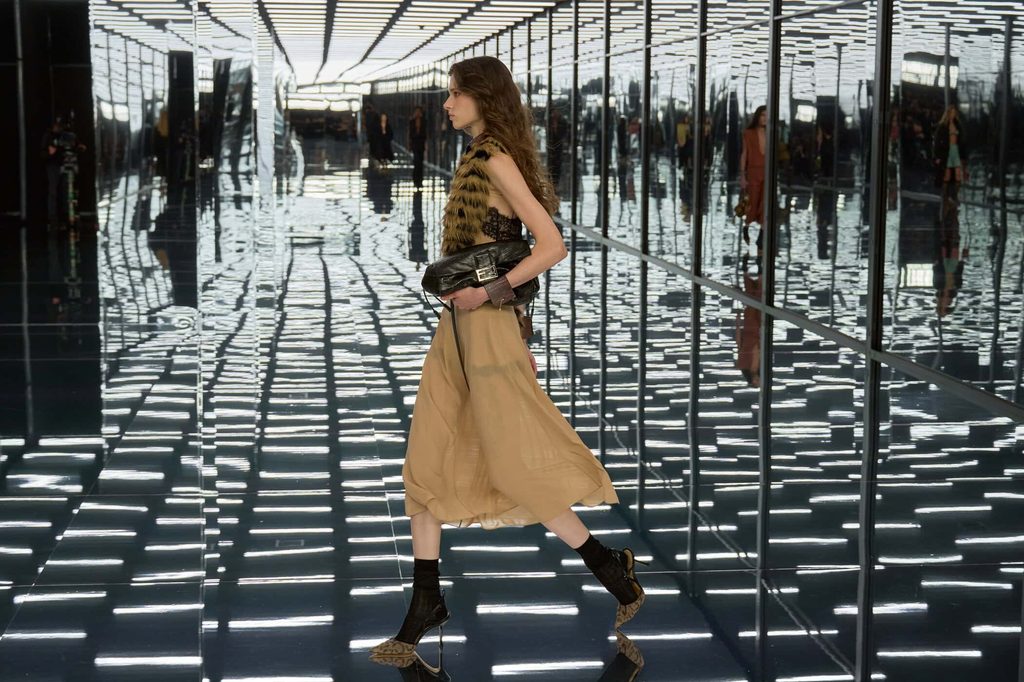
Her muse was Raffaella Carrà, the legendary Italian singer, dancer and television personality whose unapologetically sensual style became synonymous with the country’s pop culture. Carrà’s influence was unmistakable throughout the collection, which combined 1970s glamour, lingerie-inspired dressing and revealing silhouettes with the sophisticated craftsmanship expected from Fendi.
Chiuri specifically looked to Carrà’s famous performances with Adriano Celentano, including their memorable appearance on the Italian television program Milleluci. The designer described the performance as an exhilarating collective dance centered on vitality, movement and bodies interacting with one another.
That idea became one of the central themes of the collection.
Carrà’s distinctive wardrobe provided plenty of inspiration. Her signature catsuits, fitted silhouettes, mesh tops, bell-bottom trousers and glittering bralettes were translated into a contemporary Fendi vocabulary. One particularly striking look reimagined her iconic catsuit as a black, long-sleeved jersey design featuring shoulder cutouts and silver grommet details.
Elsewhere, Chiuri embraced the unabashed glamour of the 1970s. Models walked the runway in embellished maxi dresses covered in shimmering details, evoking the nightlife and excess associated with the era. The pieces carried a sense of Studio 54 glamour while remaining firmly rooted in Fendi’s modern aesthetic.
But the collection was ultimately less about nostalgia than it was about the relationship between clothing and the body.
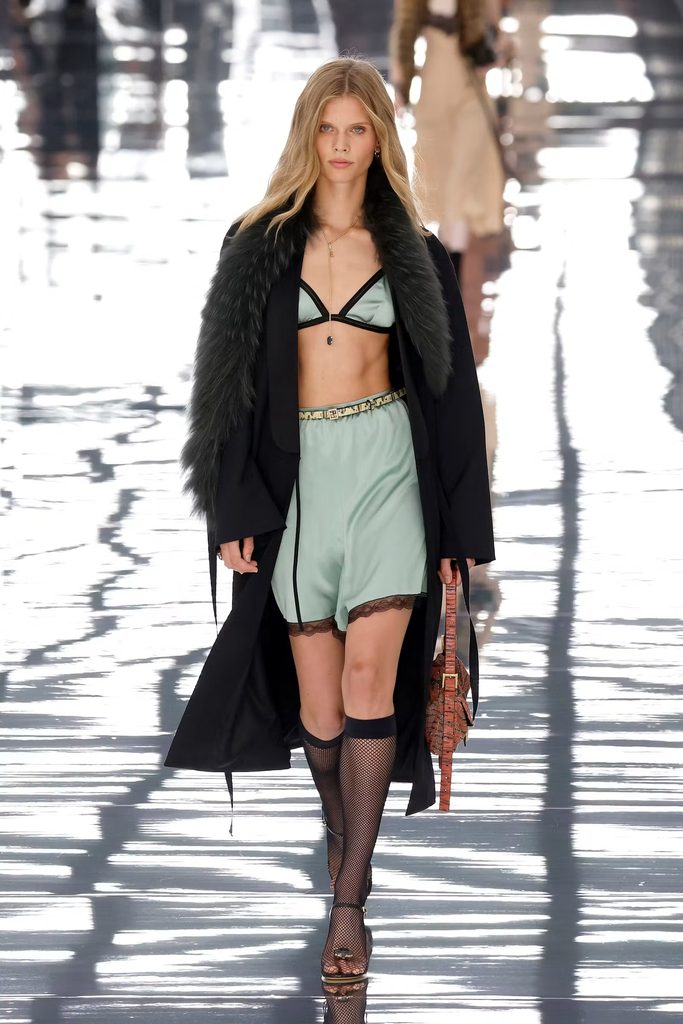
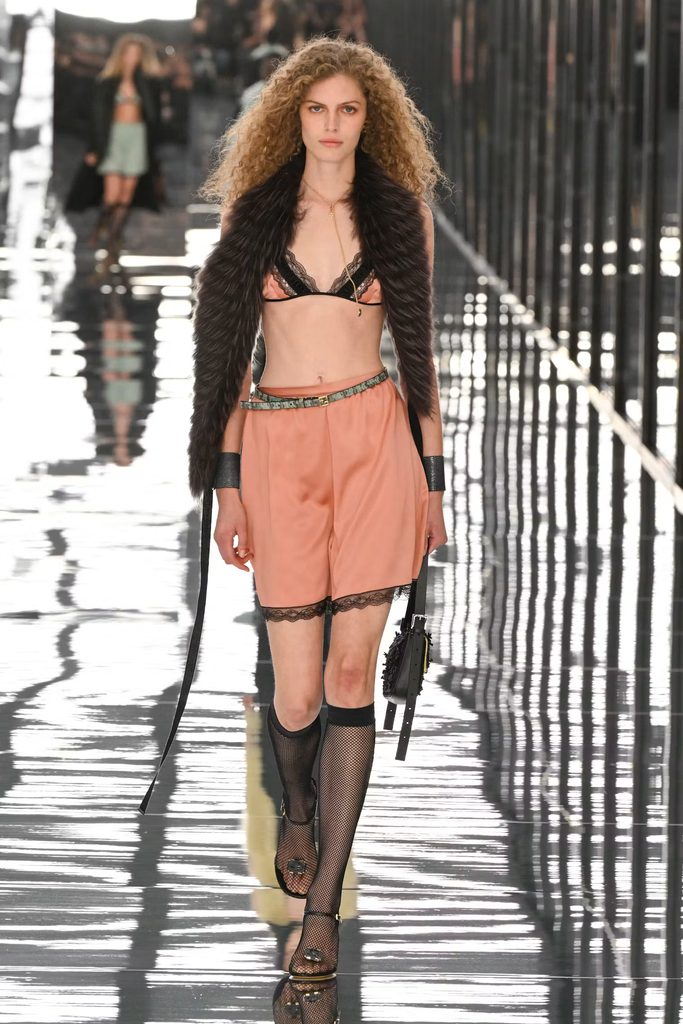
Underwear became outerwear, continuing a trend that has appeared across the Spring/Summer 2027 collections in multiple fashion capitals. Chiuri sent models down the runway in satin lingerie-inspired sets featuring long, lace-trimmed shorts paired with coordinating triangle bras.
The pieces appeared in shades including soft teal, peach and classic black, creating a palette that softened the otherwise provocative silhouettes.
The exposure was deliberate. Rather than simply using skin as decoration, Chiuri approached revealing clothing as part of a broader conversation about femininity, intimacy and personal expression. She referenced poet E. E. Cummings’ I Like My Body When It Is With Your as another point of inspiration.
“We began with conversations about undergarments, our bodies, and then what happens when we share our body with someone else,” Chiuri explained. She connected that exploration of femininity to the women of Fendi itself, including the fashion house’s founding sisters.
That idea could be seen throughout the runway.
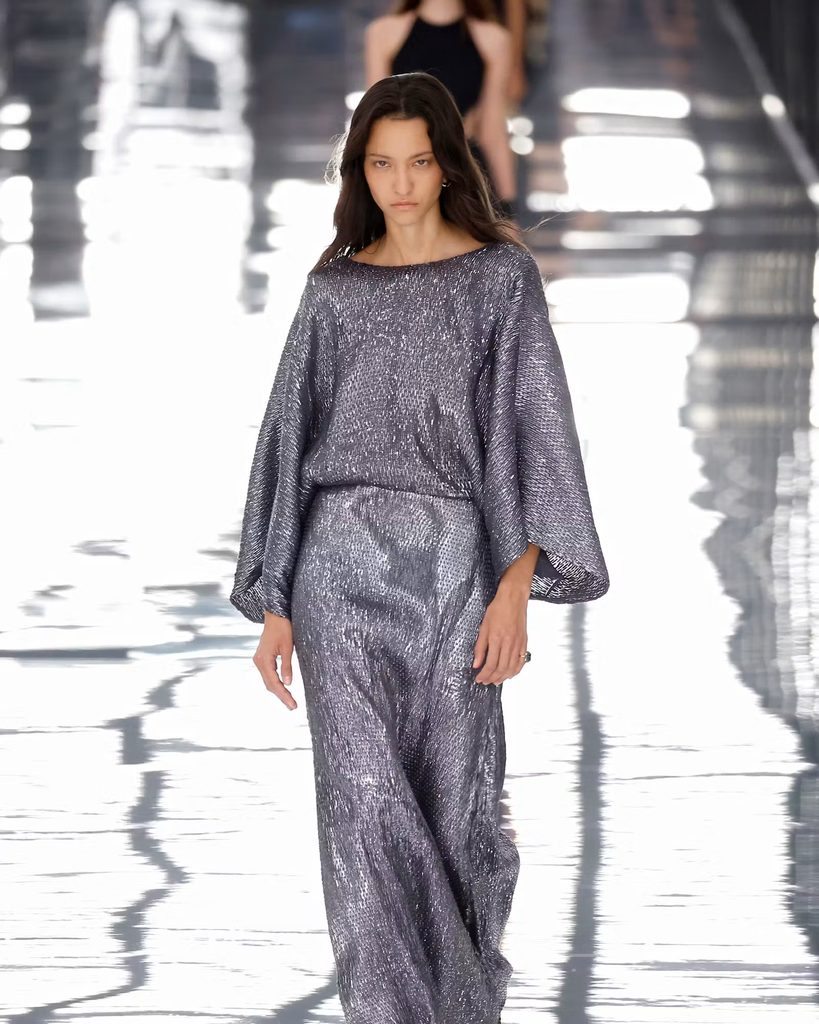
Plunging necklines exposed the chest or offered glimpses of lace bras beneath tailored pieces. Sheer chiffon dresses revealed the silhouettes underneath, while fringed tunics were styled with deliberately cheeky glimpses of lingerie. Thigh-high playsuits featured strategically positioned side cutouts, emphasizing the natural contours of the body.
The collection repeatedly played with what should remain hidden and what should be revealed.
Rather than treating lingerie as something that must remain underneath clothing, Chiuri positioned it as an integral part of the outfit. Bras, lace, satin and sheer fabrics became visible design elements, creating a dialogue between concealment and exposure.
That tension also reflected the designer’s broader understanding of the body as something simultaneously strong and vulnerable.
According to the official show notes, fashion has always been shaped by the body. For Chiuri, however, the important element is the emotional freedom that comes from that relationship. The collection therefore explores contemporary bodies and their desires, acknowledging both strength and fragility while considering how masculine and feminine identities interact.
The result is a Fendi collection that feels sensual without being limited to conventional ideas of seduction.
Carrà’s influence gives the clothes a distinctly Italian sense of theatricality, while Chiuri’s approach adds a contemporary perspective on femininity. The combination produces a wardrobe that moves confidently between lingerie, eveningwear, tailoring and body-conscious jersey.
The runway also demonstrates how effectively references from Italian pop culture can be transformed through contemporary fashion. Carrà’s original style was bold and highly recognizable, but Chiuri does not simply reproduce her famous looks. Instead, she extracts their essential elements—movement, sensuality, confidence and glamour—and translates them for a new generation.
At Fendi, the body is therefore not simply the canvas on which clothes are displayed. It becomes part of the conversation.
For Spring/Summer 2027, Maria Grazia Chiuri has created a collection about what happens when clothing follows the body rather than attempting to conceal or control it. Through sheer fabrics, lingerie-inspired separates, sculpted silhouettes and flashes of skin, Fendi embraces a form of dressing that is intimate, expressive and unapologetically sensual.
And with Raffaella Carrà as its guiding spirit, the collection carries the energy of an Italian icon who understood better than most that fashion can be just as powerful when it moves.