The Georgian designer’s first runway show signals a bold creative reset for the iconic Italian fashion house.

The spotlight at Milan Fashion Week was firmly on Gucci as the legendary Italian label revealed its Fall/Winter 2026/2027 collection in what many insiders consider one of the most closely watched shows of the season. The reason was simple: it marked the first runway presentation by the brand’s new creative director, Demna, who officially took the reins last year.
For the luxury house—founded in 1921 by Guccio Gucci—the moment represents more than a seasonal presentation. It is part of a larger creative and commercial reset orchestrated by its parent company, Kering, which is aiming to revive its flagship brand after a challenging period.
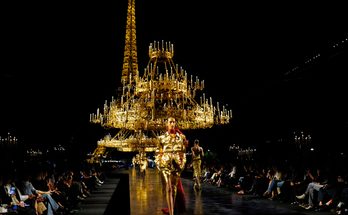
Demna’s debut collection, titled “Gucci Primavera,” introduced a new visual universe for the brand. The runway itself set the tone: models walked through a dramatic space framed by towering marble steps crowned with replicas of classical statues. The staging evoked the grandeur of the Uffizi Gallery, a symbolic nod to Florence—the birthplace of Gucci.
The show featured 83 looks spanning both women’s and menswear, signaling Demna’s intention to broaden the brand’s appeal while redefining its aesthetic codes.
Demna, the Georgian-born designer who spent a decade as creative force at Balenciaga, described his new direction for Gucci as lighter and more emotional than previous eras.
“In general I intend for Gucci to become lighter, softer, more refined, more elaborate, more emotional—even senseless sometimes,” the designer wrote in a letter shared with the press and on social media. “I don’t want it to be intellectual.”

The statement reflects a notable shift from the conceptual approach often associated with his previous work. Instead, the collection focused on a blend of glamour, sensuality, and everyday wearability.
“My vision of Gucci is about the coexistence of heritage and fashion,” Demna added. “Here they are not opposites—they are lovers.”
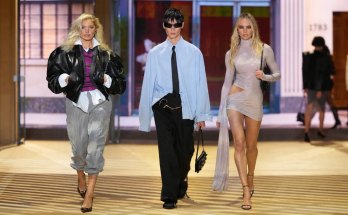
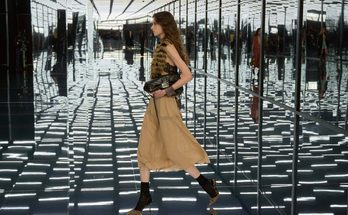
The Fall/Winter collection balanced modern silhouettes with references to Gucci’s past. Women appeared on the runway in low-waist leggings, seamless mini dresses, and sleek miniskirts paired with stockings decorated with the iconic double-G monogram. Faux-fur coats and bomber jackets added texture and volume, while sharp stilettos reinforced the collection’s glamorous edge.
Eveningwear also played a significant role. Several shimmering gowns and sleek silhouettes captured attention under the runway lights, reflecting the kind of red-carpet appeal Gucci has long mastered.

For men, Demna leaned into body-conscious tailoring and street-inspired pieces. Models wore tight tops that highlighted sculpted physiques, paired with biker jackets or oversized leather shoes in bold red and white. Some carried the brand’s recognizable cross-body belt bags, accessories that have become staples within Gucci’s modern catalog.
The collection closed with a memorable moment when supermodel Kate Moss stepped onto the runway in a glittering black evening gown with an open back. The look subtly revealed a thong embroidered with the golden double-G logo, an irreverent detail that sparked conversation among attendees and fashion commentators.
Industry observers quickly drew comparisons between Demna’s debut and the glamorous aesthetic associated with Tom Ford, who famously revitalized Gucci in the 1990s.
According to Gaya Guiragossian, the new collection carried clear references to that era.
“Demna’s debut at Gucci is the most scrutinized show of this season,” she noted. “His collection was a nod to the glamorous Tom Ford era—with smoky eyes, silk shirts, and shiny materials reminiscent of the 1990s.”
For longtime fans of the brand, those references signal an attempt to reconnect with a period when Gucci defined global fashion trends.
The creative reset arrives at a crucial moment for the luxury house. Gucci has experienced declining sales in recent years, with revenue reportedly dropping significantly in 2025.
More broadly, the luxury industry has been facing a slowdown after the post-pandemic boom. According to estimates from the consulting firm Bain & Company, the sector lost roughly 50 million customers as demand softened and consumers began questioning rising prices and declining product desirability.

For Gucci’s parent company, Kering, the stakes are high.
Last year the group appointed Luca de Meo to lead a broader turnaround strategy aimed at restoring momentum for its flagship label. Speaking after the runway presentation, De Meo emphasized the importance of speed and energy in the brand’s transformation.
“It was important to give a sign of speed and dynamism,” he told journalists following the show, adding that he believes Gucci is moving “in the right direction.”
Demna’s appointment in July last year was widely seen as a bold move. Known for his provocative and often experimental approach to fashion, the designer has built a reputation for pushing boundaries.
During his tenure at Balenciaga, he created viral products such as the Triple S sneaker, which helped redefine the relationship between luxury fashion and streetwear. His work appealed strongly to younger generations and generated significant commercial success for the brand.
At the same time, his career has not been without controversy. A Balenciaga advertising campaign in 2022 sparked backlash after being accused of inappropriate imagery involving children. The incident prompted public apologies from both the brand and the designer.

Despite those challenges, industry analysts believe Demna’s ability to generate cultural buzz is precisely why Kering selected him to lead Gucci’s next chapter.
Some pieces from the Fall/Winter 2026/2027 collection are already set to appear in select boutiques and online, with a broader commercial rollout scheduled for July 2026. The strategy reflects a faster production and retail cycle designed to maintain excitement around the brand.
For now, the fashion world will be watching closely. Demna’s debut collection represents the beginning of a new era—one that blends Gucci’s historic identity with a fresh creative voice.
Whether that vision can reignite the brand’s global desirability remains to be seen. But after one of the most talked-about runway shows of the season, it is clear that Gucci’s transformation has officially begun.