New York Fashion Week has once again transformed the city into a stage for fashion’s next chapter. As the Spring/Summer 2027 collections arrived on runways and in iconic Manhattan spaces, designers offered sharply different visions of what modern American style can look like—from polished minimalism and relaxed prep to extravagant eveningwear and experimental silhouettes.
The September fashion calendar has long represented a reset for the industry, setting the tone for the trends that will dominate the following year. This season, New York’s designers leaned heavily into the city’s particular ability to make contradiction feel effortless. Sportswear became glamorous, tailoring became relaxed, and classic American codes were reworked through unexpected proportions, textures, and embellishment.
Beyond these established American names, New York Fashion Week offered a remarkably broad range of creative voices.
Rachel Comey, Cult Gaia, and Coach opened the week with collections that reconsidered the possibilities of American sportswear. Coach also celebrated its 85th anniversary, using the milestone as an opportunity to look at the house’s history through a contemporary lens.
Diane von Furstenberg returned to the official fashion calendar after nearly a decade away, with Henry Zankov making his debut as creative director. The moment represented an important new chapter for the historic label.
Elsewhere, designers including Daniella Kallmeyer, Anna Sui, Kate Barton, Sandy Liang, and Rachel Scott of Proenza Schouler explored different interpretations of modern femininity.
Eveningwear remained an important part of the New York landscape, with Carolina Herrera, Thom Browne, Jonathan Simkhai, and Michael Kors delivering more polished and glamorous visions for the season.
At the opposite end of the spectrum, a younger and more experimental generation—including Terrence Zhou, Jane Wade, Christian Juul Nielsen, and Lorena Pipenco—pushed silhouettes and materials toward more dramatic territory.
That range is ultimately what makes New York Fashion Week so compelling. Few fashion capitals offer such a broad conversation between heritage and innovation, practicality and fantasy, minimalism and excess.
For Spring/Summer 2027, New York proved once again that American fashion does not have to fit into a single aesthetic. It can be polished or playful, traditional or provocative, quiet or spectacular—and sometimes all of those things at once.
Among the week’s highlights were major collections from Ralph Lauren, Tommy Hilfiger, Tory Burch, and Calvin Klein, alongside a wide-ranging group of established and emerging designers pushing New York fashion in new directions.
Here are some of the standout looks from the Spring/Summer 2027 season.
Ralph Lauren
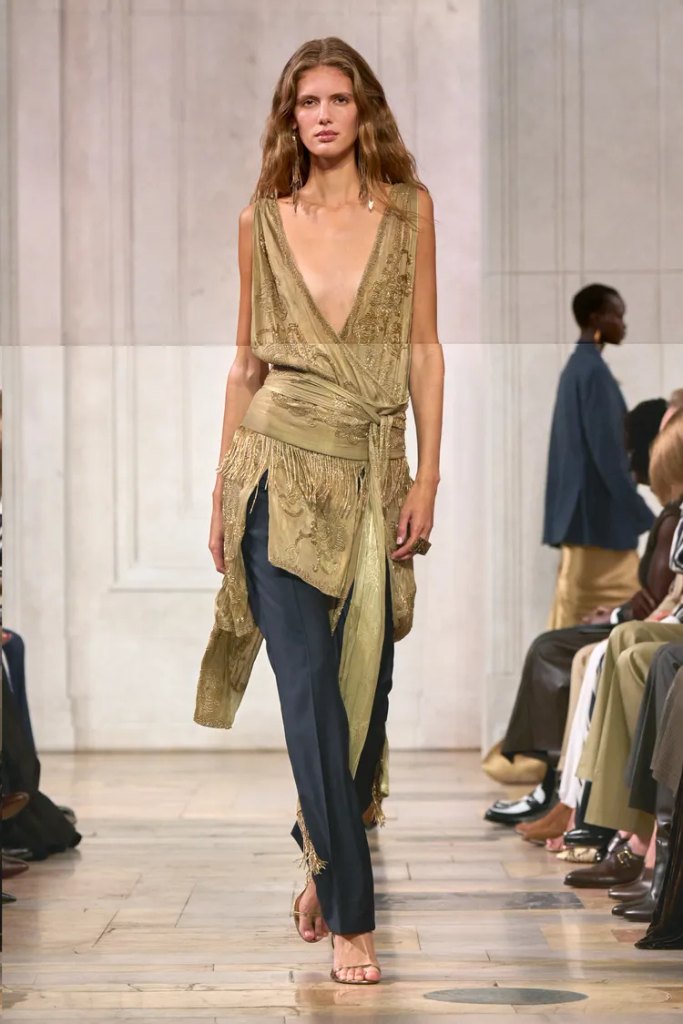
Ralph Lauren once again explored the tension between rugged Americana and refined glamour, presenting a collection that felt both deeply familiar and deliberately extravagant.
The designer described the season as an “irreverent take on romance,” with an emphasis on individuality and character. That idea appeared throughout the collection, where crisp tailoring and practical outerwear were paired with dramatically embellished pieces.
Traditional trousers and structured jackets provided the foundation, but Lauren quickly disrupted that restraint with flapper-inspired tops covered in beads and fringe, flowing silk skirts with a liquid-gold sheen, and denim elevated through intricate jacquards.
Fur stoles added another layer of old-school glamour, creating looks that felt intentionally excessive without losing the relaxed attitude that has always been central to Lauren’s vision.
The collection demonstrated why Ralph Lauren remains one of the strongest interpreters of American fashion: he understands how to make luxury feel aspirational while preserving an unmistakable sense of ease.
Tommy Hilfiger
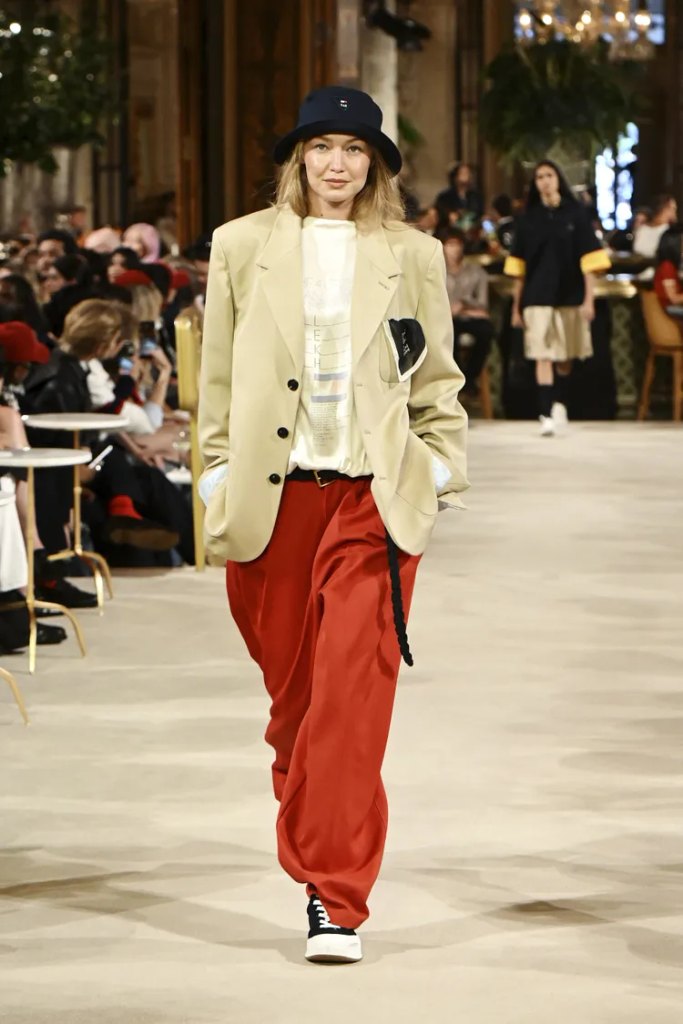
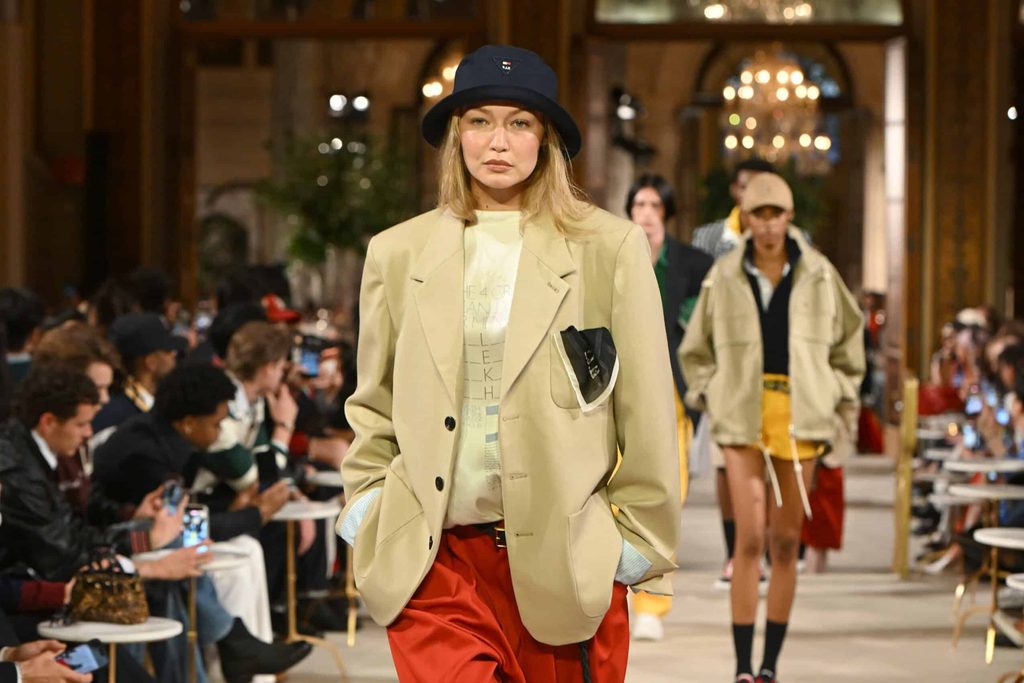
Tommy Hilfiger made his return to the New York Fashion Week calendar with a full-scale homecoming at The Plaza Hotel.
The location provided the perfect backdrop for a collection rooted in classic American prep. Models moved through the hotel’s legendary interiors wearing familiar Hilfiger codes, but the silhouettes were intentionally loosened and updated for a more relaxed generation.
Oversized blazers and trousers created a borrowed-from-the-boys attitude, while sporty color combinations kept the tailoring from feeling overly formal.
The collection’s sexier moments came through fitted knit dresses that transformed rugby-shirt references into sleek, body-conscious silhouettes. The contrast between oversized tailoring and closer-fitting pieces gave the collection an easy rhythm.
More than simply revisiting prep, Hilfiger made a case for its continued relevance. The clothes felt youthful, confident, and unmistakably connected to New York.
Tory Burch
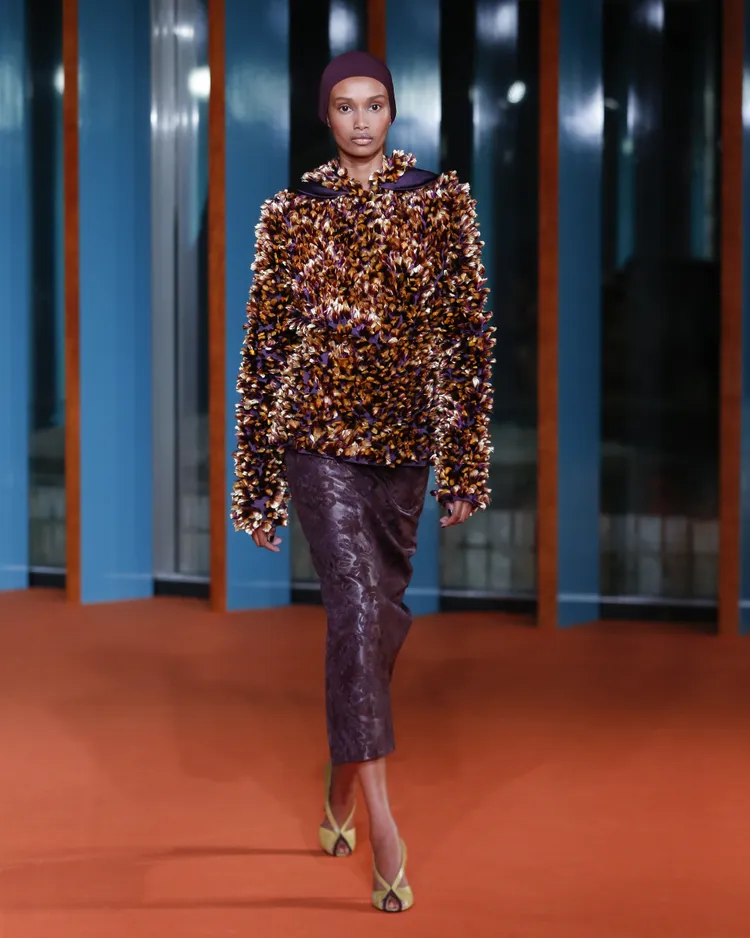
Tory Burch brought a sense of exuberance to the Spring/Summer 2027 season, balancing practical wardrobe staples with unapologetically decorative details.
The collection approached femininity through a lens of optimism rather than restraint. Cardigans were decorated with coral-like beading, boxy silhouettes were punctuated by oversized chains, and jewel-toned garments were finished with floral-inspired embellishment.
What made the collection particularly appealing was its understanding that luxury clothing does not necessarily have to be serious. Burch introduced humor, color, and ornamentation into pieces that remained fundamentally wearable.
The result was a wardrobe designed for someone who wants practicality without sacrificing personality. Even the most everyday silhouettes felt elevated through texture and unexpected details.
Calvin Klein
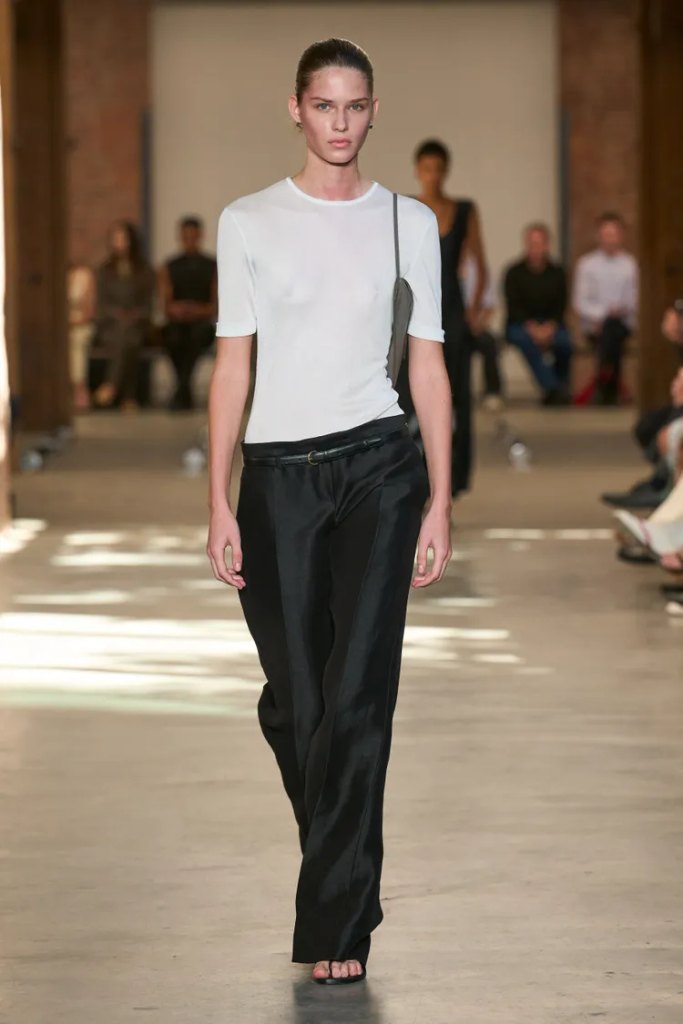
At Calvin Klein, Veronica Leoni returned to the house’s minimalist foundations with a collection that embraced precision, restraint, and simplicity.
The aesthetic immediately evoked the polished minimalism associated with the ’90s, particularly the effortless style of Carolyn Bessette-Kennedy. Clean lines, sharp tailoring, and streamlined silhouettes dominated the collection.
Rather than relying on elaborate decoration, Leoni focused attention on proportion and construction. Each garment appeared carefully reduced to its essential elements, allowing the shapes themselves to create impact.
The result was a collection that felt quietly luxurious rather than overtly dramatic. In a season filled with embellishment and experimentation, Calvin Klein’s restraint stood out as its own kind of statement.